03.06.2026

There is no such thing as 100% anonymity. Every action you take on the internet leaves behind a digital footprint like device specifications, browser settings, network data, behavioral patterns and a range of other indirect markers that can be pieced together.
That’s why anonymity is always relative. It depends not only on the tools you use, but also on who is trying to identify you, what data they already have and what resources they can bring into the analysis.
Thit is the reason why antidetect browsers are often misunderstood. A common assumption is that they can completely hide a user. In reality, that’s not how they work. An antidetect browser doesn’t make you “invisible”. It rather reduces the chances of being identified by spoofing your digital fingerprint.
Every interaction in the digital environment leaves traces. Not just your IP address, but also other parameters: browser configuration, system data, network setup and even patterns in user behavior.
These signals may seem harmless if analyzed separately. But when combined, they form a unique profile. And modern antifraud systems are built specifically around correlating these signals rather than relying on any single one.
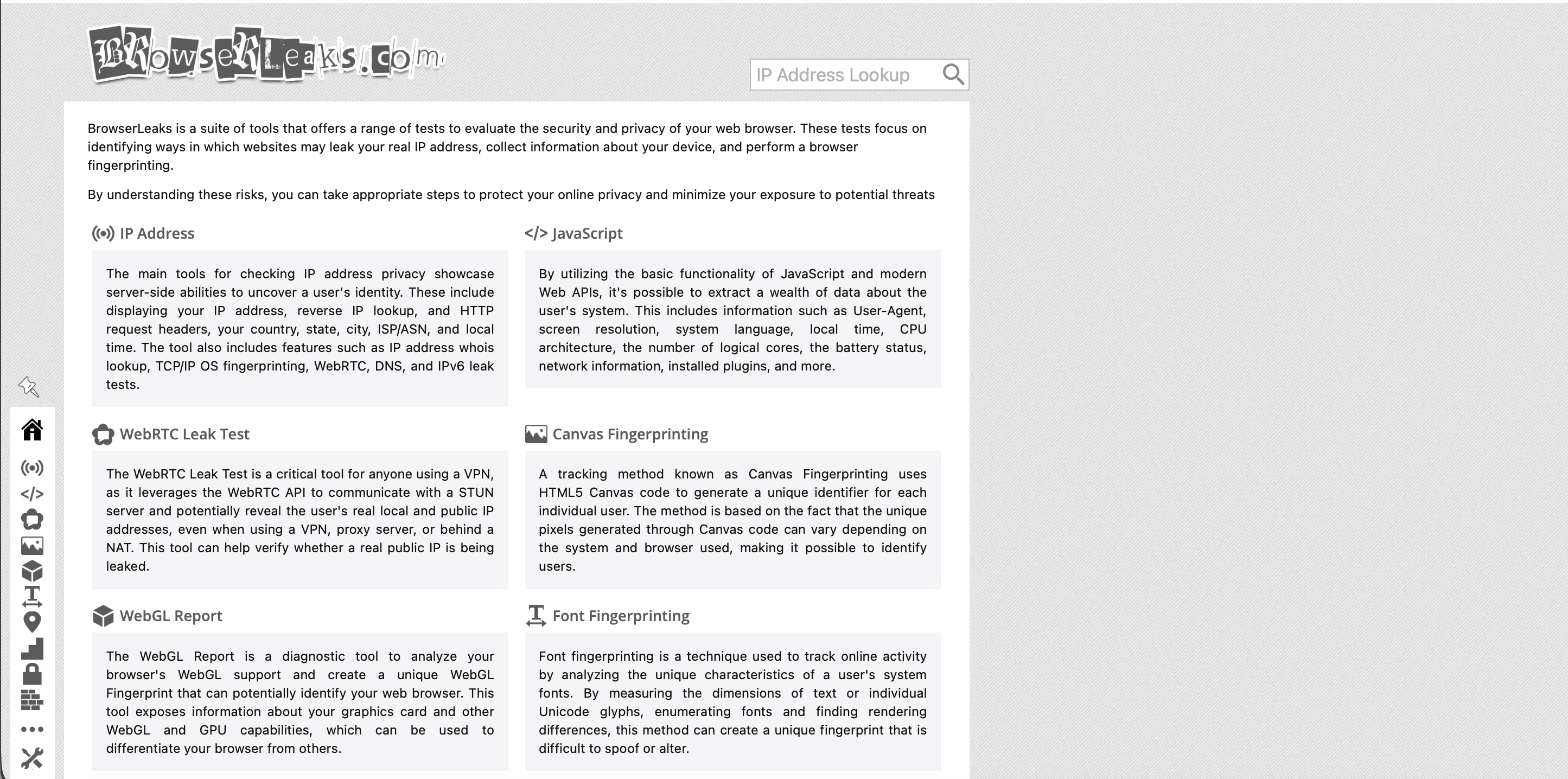
Fingerprint checkers like BrowserLeaks analyze hundreds of parameters across different layers of the system.
An antidetect browser allows you to control a part of this data. At the same time, there is always a level where de-anonymization remains possible. The only real question is how much effort it requires and whether it is actually worth doing.
An antidetect browser doesn’t make a user completely invisible. Its job is to generate a new digital fingerprint that looks believable meaning each created profile should appear:
Consistent with no conflicting parameters;
Ordinary resembling real users rather than something artificial;
Stable and not constantly changing between sessions.
Doing this manually is not a trivial task, because it requires aligning dozens of different characteristics: User-Agent, Canvas, WebGL, fonts, screen resolution, timezone and many others. When everything is configured correctly, the system no longer flags the profile as suspicious or requiring additional verification.
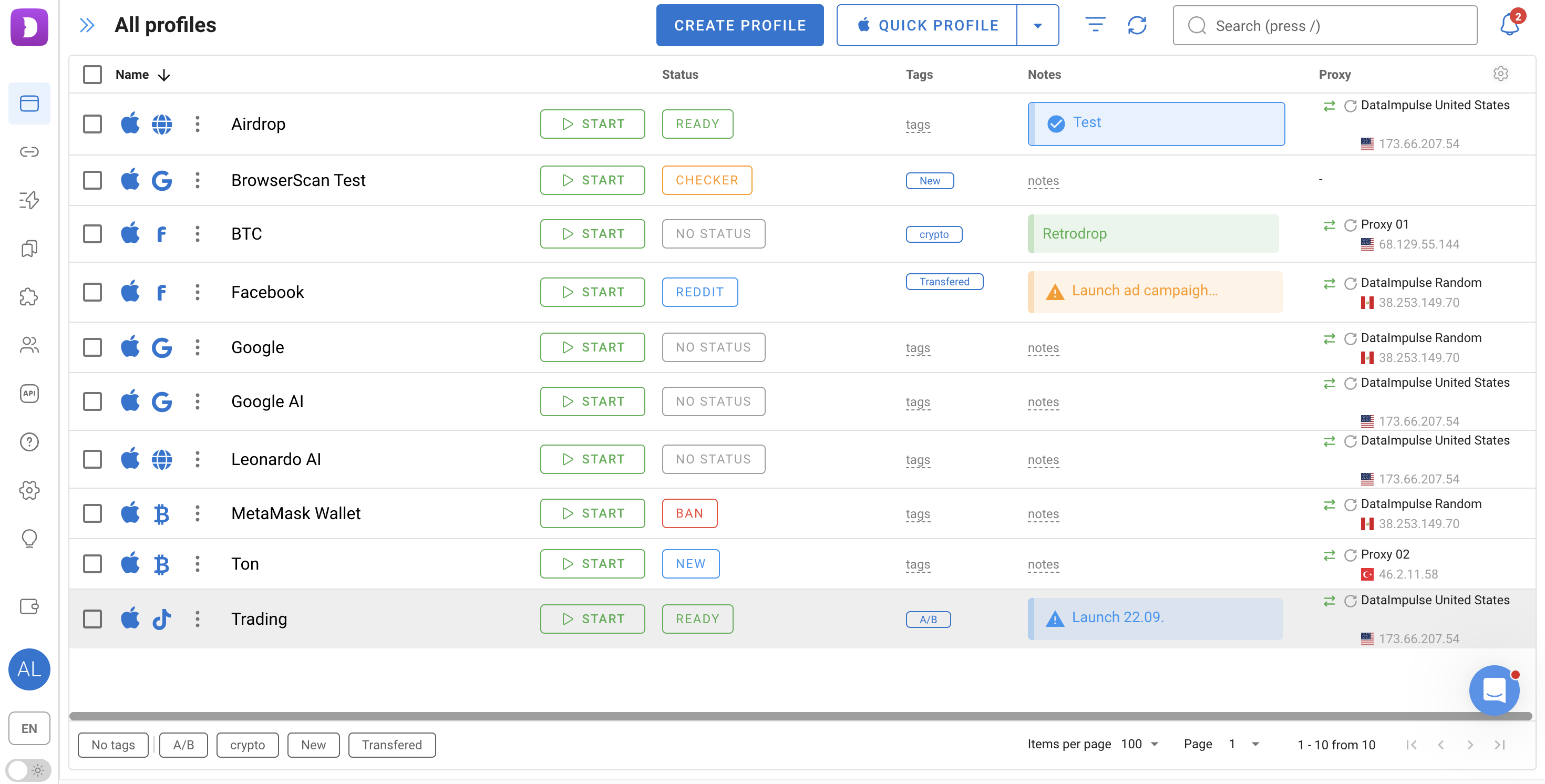
That’s why people tend to use ready-made solutions like Dolphin Anty. The browser automatically generates profiles with consistent parameters, where the fingerprint looks natural and avoids obvious inconsistencies that trigger antifraud systems.
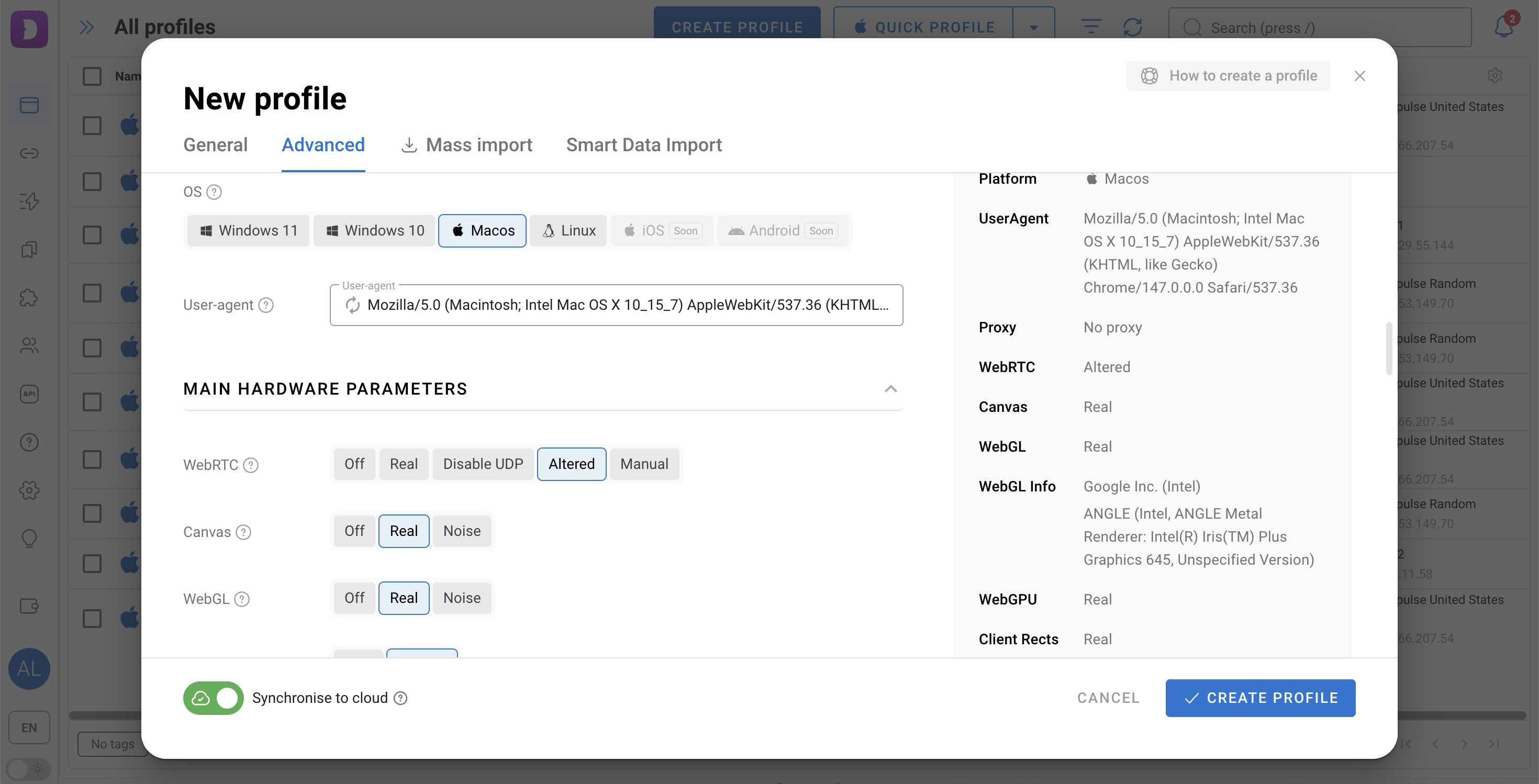
This becomes especially important when working with multiple accounts, where you may need to create dozens or even hundreds of separate profiles with different configurations and keep them consistent across sessions. Handling that volume of effort manually takes time and constant oversight, while in Dolphin Anty it can all be done in just a few clicks.
However, there is an important thing to understand: an antidetect browser cannot work properly without a correctly configured network environment. This is where proxies play a key role.
A proxy is one of the core layers of a digital fingerprint, and often one of the first things systems evaluate. For example, if a profile uses a German IP address, but the browser language and timezone do not match that region, it creates a mismatch. For antifraud systems, discrepancies like this are a direct signal for additional review.
That is why using a proxy alone is not enough. It also needs to match the rest of the profile:
The IP geolocation should align with the profile settings;
The proxy type (mobile, residential, datacenter) should fit the specific task;
The IP address should be clean, with no history of mass registrations or suspicious activity.
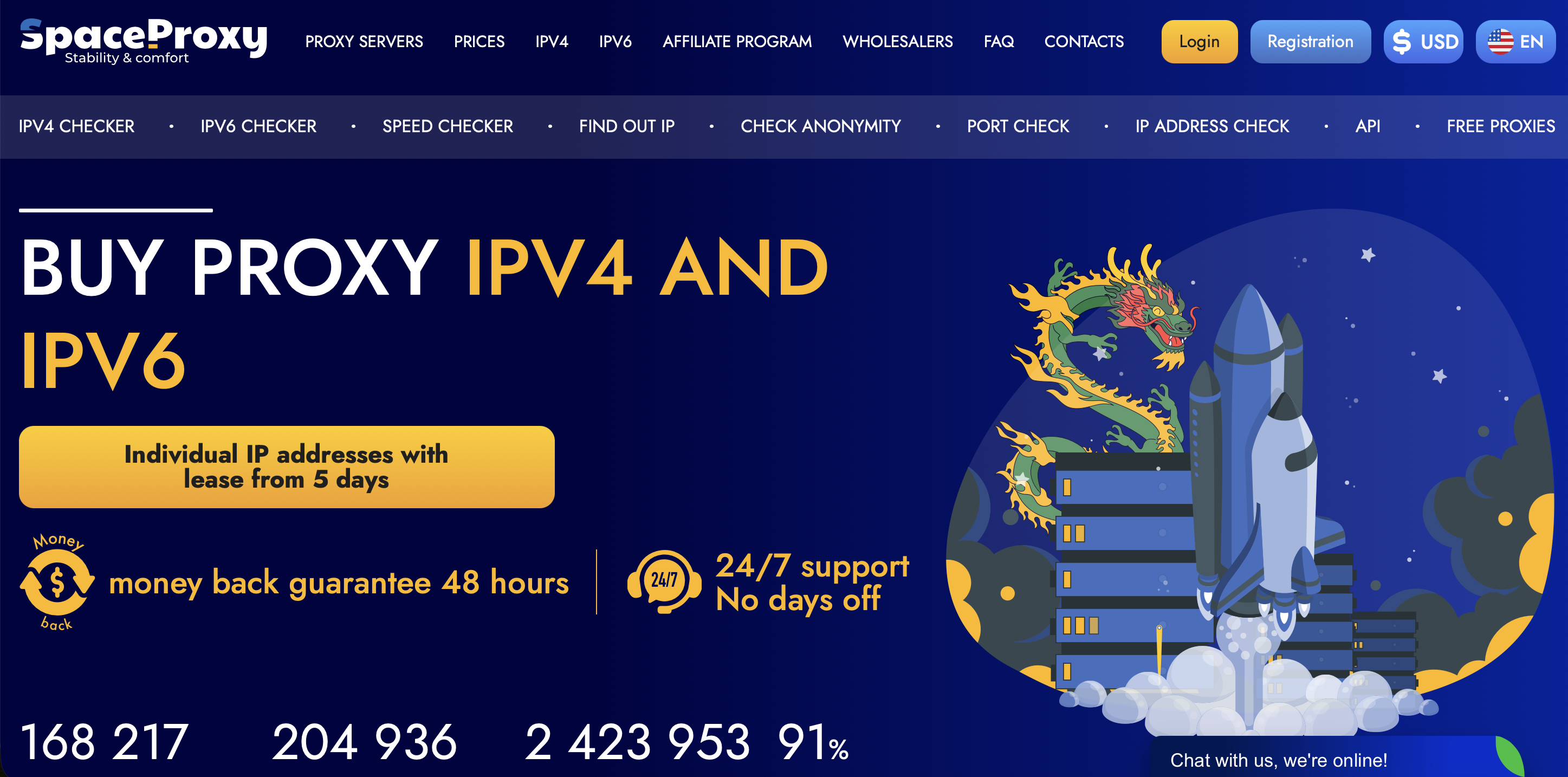
Proxies like these are available at SpaceProxy. The service offers IP addresses in more than 110 countries, 24/7 customer support and a 48-hour refund option. It also highlights a strong level of anonymity and the ability to manually choose IP locations up to the city level.
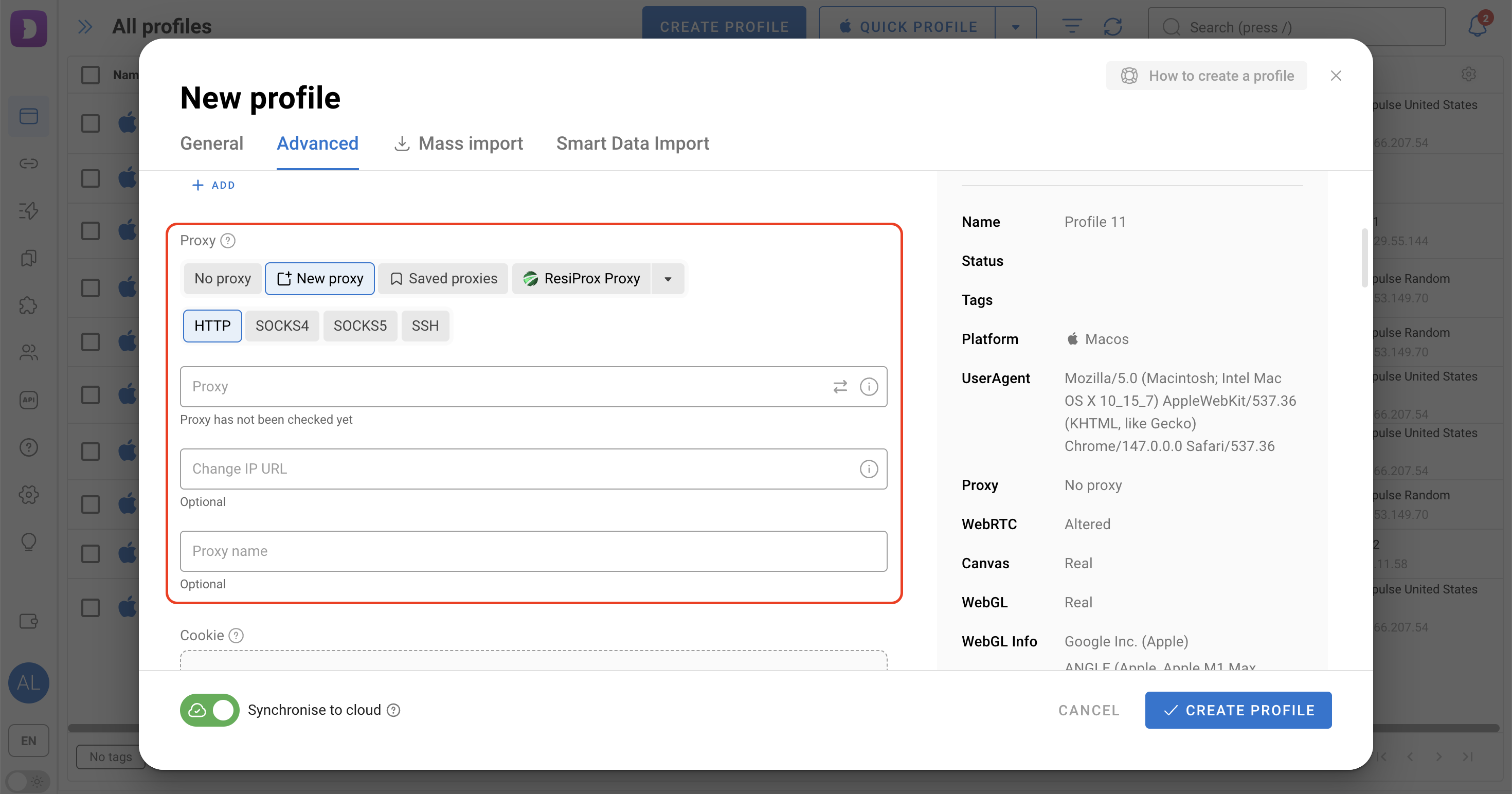
In Dolphin Anty, proxies can be added directly while creating a profile or through a separate proxy management tab. Simply enter your SpaceProxy credentials into the required fields and you're ready to go.
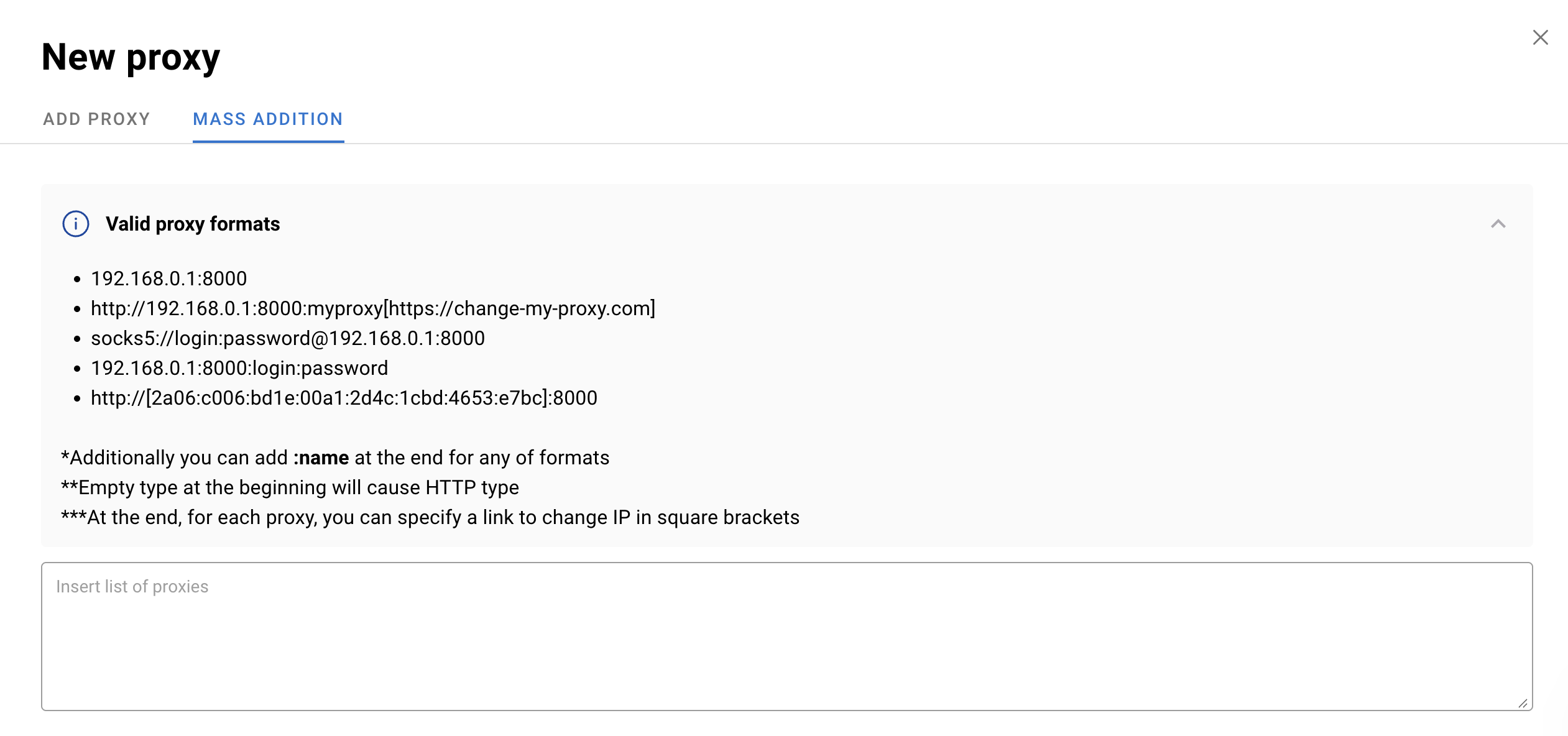
It supports both individual proxy setup and bulk import, which is especially useful when managing a large number of accounts.
Proxies can also be assigned to profiles manually, randomly, sequentially or every Nth profile. This makes scaling easier and reduces the risk of configuration mistakes.
The level of anonymity always depends on who is analyzing the user and for what purpose. Large platforms like Google and Meta are not focused on identifying people for the sake of it. Their goals are more practical like protecting their advertising ecosystems and revenue streams. That primarily means fighting fraud, multiaccount abuse, fake engagement and low-quality traffic that distorts ad performance and leads to financial losses.
They invest heavily in antifraud systems because they operate on auction-based advertising models. Any manipulation involving accounts, clicks or user behavior can directly affect pricing and campaign efficiency. That is why these systems constantly evaluate whether a user looks like a normal person and how different accounts may be connected.
Tools like antidetect browsers and proxies are not mainly used for anonymity, but for operations: creating separate ad accounts, isolating them from each other and scaling campaigns in a stable way. This helps reduce the risk of one blocked account affecting the entire setup.
An antidetect browser does not make a user completely anonymous, because that is not technically achievable. What it does is help users avoid standing out when running multiple profiles. Combined with properly selected proxies, it creates a believable digital fingerprint that does not immediately trigger security systems. In many practical cases, that is enough to operate smoothly.
The affiliate program allows you to earn 10% of all client payments for life from those referred through your affiliate link.
You can withdraw funds to:


 admin@spaceproxy.net
 @spaceproxybot
 24 hour support
No days off
24 hour support
No days off

 USA
USA Germany
 Canada
 Russia
 Ukraine
 Belarus
 Kazakhstan
 VKontakte
 Odnoklassniki
 Facebook
 Youtube
 Instagram
 Pinterest
 Telegram
 Lineage 2
 ArcheAge
 Pokemon Go
 World of Warcraft
 Perfect World
 World of Tanks
 Steam
Steam VkJust
 SocialKit
 Tooligram
 Keycollector
 Sobot
Sobot Spotify
 Docker
 Ebay
Ebay Amazon
 Teamviewer
 iPhone
 Samsung
 Play Station 4
 Xbox One
 Opera
Opera Firefox
 Safari
 Dolphin